 Español
 Training
What is needed to be an aviation pilot in the United States?
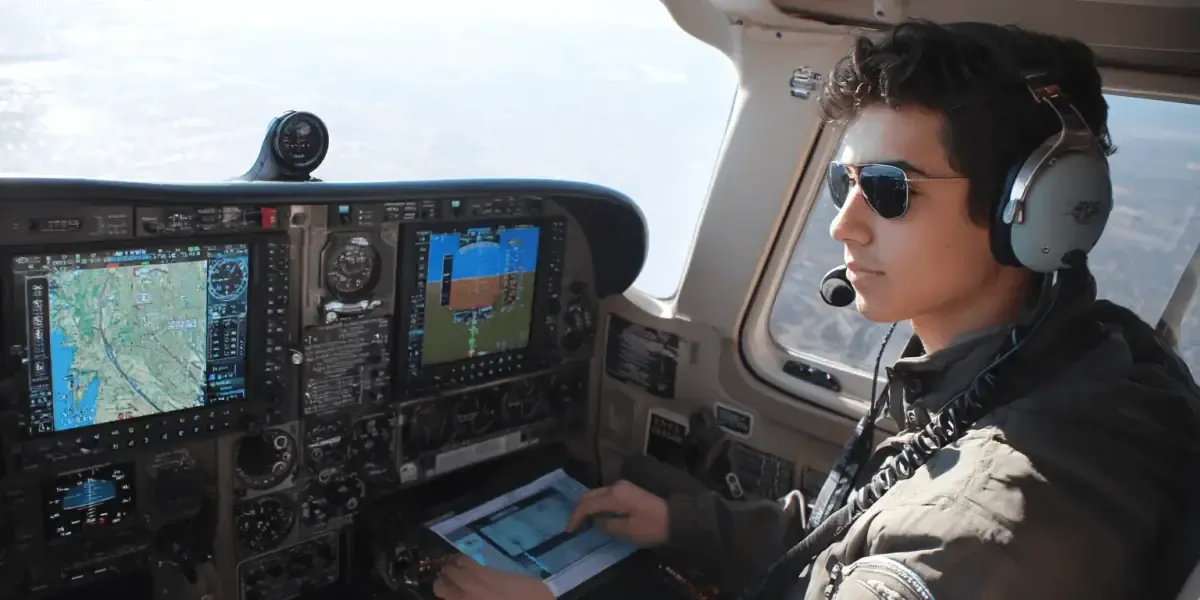
Are you passionate about flying and dream of becoming a professional pilot? You’ve come to the right place. A career as an airplane pilot is one of the most exciting, challenging, and rewarding in the world, but it also comes with countless doubts. In this guide, we explain what you need to become an aviation pilot.
What do you need to study to be an airplane pilot?
One of the most common questions is: to be an airplane pilot, what do you have to study? The training of a commercial pilot begins with the study of specialized programs that combine aeronautical theory, flight hours, and training in high-tech simulators.
At Alpha Aviation Group, we offer a structured career path that includes:
- PPL (Private Pilot License): the first step to learning how to fly.
- CPL (Commercial Pilot License): allows you to fly professionally and work for airlines.
- IFR (Instrument Rating): the ability to fly with instruments in adverse weather conditions.
- Multi-Engine: license to operate aircraft with more than one engine.
You can achieve all of this with the support of our guide, certified by the FAA (Part 61) in the United States.
How long is the airplane pilot career program?
We will not publish a 12-to-18-month calendar or a 250-hour airline door. Weather, proficiency, and aircraft time move the date. Airline minimums and ATP rules are a different bar from a commercial certificate. Ask admissions for a current path.
Alpha Aviation advises on that path. Alpha Flight Academy delivers the flying under Part 61 in Miami, Florida, at Fort Lauderdale Executive Airport (FXE).
Do you want to start your airplane pilot career in the United States?
What you can check without inventing a hiring date:
- Certificate ages in Part 61 are 17 for private airplane (§ 61.103) and 18 for commercial (§ 61.123). Dual can start earlier.
- English you can use on the radio.
- A medical class that matches the privileges you will exercise (§ 61.23) — not first class as a day-one ticket.
- A valid passport if you are traveling to train. A student visa is not a school form. This is not legal advice. Alpha Aviation does not provide legal advice.
Where to study aviation?
Many students from Latin America choose Alpha Aviation Group to study aviation in the United States thanks to its high-quality training, advanced simulation technology, and the prestige of obtaining an FAA license.
At Alpha Aviation Group, we not only train you as a pilot, but we also provide:
- Admissions support for the training file. Alpha Aviation does not provide legal advice. A student visa needs specialized human review by a licensed immigration attorney.
- Help with application timing and housing questions that the school can actually answer.
- Instructors who teach under FAA Part 61 at Fort Lauderdale Executive Airport (FXE).
- A bilingual environment for students from Latin America.
Learn about our “The Airline Career Pathway” program?
Alpha Aviation Group offers you “The Airline Career Pathway” program, a direct path to success that consists of:
- Step-by-step support on the training path. A student visa is not included as a legal service. Alpha Aviation does not provide legal advice. Airline hiring is not guaranteed.
- Phases describe competencies, experience, and introductions — not a promised license, hour total, or job.
What is phase 1: competencies?
- Flight training from a private certificate toward commercial and multi-engine ratings with Alpha Flight Academy under Part 61.
- No university partnership is claimed here. Alpha is a consultancy plus a Part 61 school, not a university.
What is phase 2: experience?
- Instructor ratings (CFI / CFII) may be part of a later plan if they fit your path.
- Paid instructor work is not a guaranteed salary or hour total. Alpha does not publish dollar figures or promise 1,500 or 2,500 hours.
What is phase 3: career introductions?
- Extra courses such as ATP-CTP, if they apply, are a later conversation with admissions.
- Alpha may introduce qualified graduates to operators. That is not a guaranteed airline job or a published salary.
With the right support, you can become a commercial pilot in the United States. At Alpha Aviation Group, we focus on raising the quality of instruction and accompanying each of our students on their path to a professional future.
What other careers are there in aviation?
Besides studying to be a commercial pilot, there are other options within aviation careers, such as:
- Aviation Mechanic
- Air Traffic Controller
- Flight Dispatcher
- Flight Instructor
- Drone Operator
Each of these has its own requirements but is connected to the exciting universe of flight.
Your aviation career starts today?
Starting is a training decision, not a guaranteed international job. Ask for a dated plan. Do not treat this page as a hiring date.
Details without the old hour promises: U.S. training requirements and the pilot program.
Frequently asked questions
Do I need a Class 1 medical to start?
No. 14 CFR 61.23 ties medical class to the privileges you exercise. Private flying typically needs a third-class medical (or the allowed alternative). First class is for airline transport privileges, not the first inquiry.
How long until I can apply to a regional airline?
We will not publish “12 to 18 months” or “250 hours to enter airlines.” Airline minimums and ATP rules are a different bar from a commercial certificate. Ask admissions for a current path; do not plan a hiring date from a blog.
Where would I actually fly with Alpha?
Advising is for students coming to Miami, Florida. Practical flying is at Fort Lauderdale Executive Airport (FXE), with North Perry (KHWO) as a satellite. A student visa is not included as a legal service. Alpha Aviation does not provide legal advice.