 Español
 Training
The New Supersonic Race: Will We See the Return of the "Son of Concorde"?
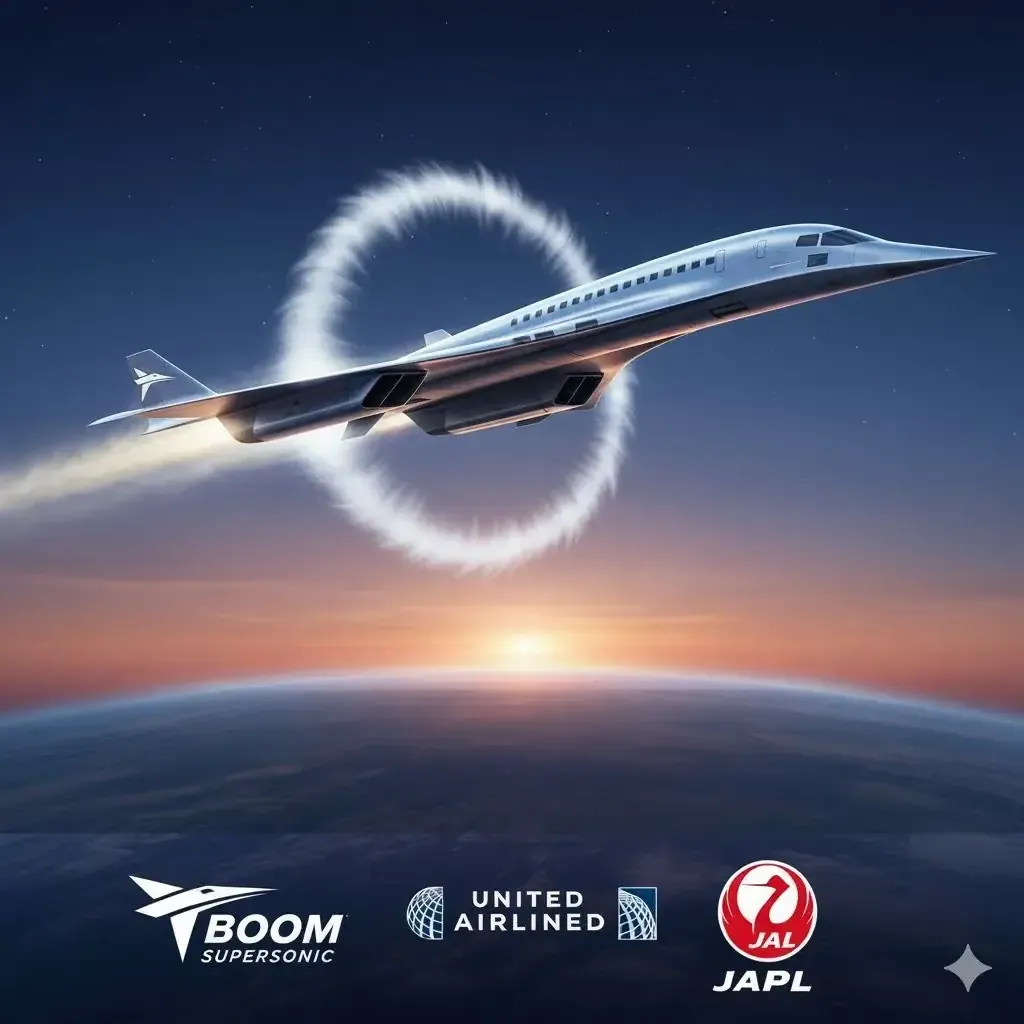
Nostalgia in aviation has a clear name: Concorde. The possibility of crossing the Atlantic from London to New York in less than 3 and a half hours was more than a flight; it was a leap into the future. However, in 2003, that dream vanished amid high operational costs, an unsustainable environmental footprint, and, above all, a deafening noise: the “sonic boom.”
But the dream of traveling faster than sound never fully died. Today, a new generation of engineers and visionaries is competing in a new supersonic race. The question is: are these projects real, or is it just nostalgia?
The new contenders: Who is building the “Son of Concorde”?
Unlike the race of the 1960s, which was funded by governments, the new supersonic era is led by the private sector. The name that resonates most strongly is Boom Supersonic.
This American company is developing the “Overture,” an aircraft designed to fly at twice the speed of current planes (Mach 1.7) and carry between 65 and 80 passengers. And it’s not just a project on paper:
- Airlines have announced interest or orders. Treat those as company statements, not a ticket you can buy.
- Sustainability is Key: Unlike the Concorde, the Overture is being designed from the ground up to operate on 100% Sustainable Aviation Fuel (SAF).
The great challenge: Silencing the Sonic Boom?
The Concorde’s biggest obstacle was the noise. When it broke the sound barrier, it generated a shock wave as loud as thunder, which led to a ban on its supersonic flights over land. This drastically limited its profitable routes.
This is where the most fascinating technology comes in. NASA, through its X-59 “Quesst” mission, is testing a design that doesn’t produce a “boom,” but rather a “thump,” so quiet it could pass unnoticed on the ground.
If NASA proves that this “quiet boom” is viable and manages to get regulators (like the FAA) to lift the ban on supersonic flights over land, the market would open up completely.
Will it be a luxury for a few or a reality for all?
Let’s be clear: the first supersonic flights will not be cheap. Boom aims for a ticket to cost the same as a current first-class or business-class seat. The goal isn’t to replace all flights, but to optimize key transoceanic routes (like Miami-London or Los Angeles-Tokyo).
The true “Son of Concorde” won’t just be faster. It will have to be quieter, much more efficient, and, above all, profitable.
When will we be able to fly in them?
This page will not give a passenger year. Boom and others have shown concepts and test articles. Certification, boom rules, and fuel still sit in the way. Treat “2030” or “closer than ever” as stale marketing until an operator publishes a ticket.
Present-tense flying, not a concept: pilot program. Another long-horizon note: space pilots.
Frequently asked questions
Will I fly as a passenger on a new Concorde soon?
This page will not give a year. Several companies have shown concepts and test articles. Overland boom rules, fuel burn, and airports still sit in the way. Treat any “soon” from 2023–2025 coverage as stale until the operator publishes a ticket.
What is the sonic boom problem?
A boom is the ground noise of an airplane faster than sound. Concorde was largely kept over water because of it. New designs claim a quieter signature. Until a regulator writes a rule you can read, that claim is engineering talk, not a route map.
Should a student train “for supersonic”?
No. Train the certificates in front of you. Alpha’s airplanes are trainers at Fort Lauderdale Executive Airport (FXE) in the Miami metro. A future type rating, if it exists, will come years after a CPL — if it comes at all.